10-Sentence Summary
- TNX is the single most powerful macro variable affecting global ETF performance.
- When TNX rises, the discount rate rises → growth ETF valuations fall.
- Value ETFs become more resilient because their earnings are current, not far in the future.
- A rising dollar typically follows rising TNX, pressuring EM ETFs like EEM and EWY.
- Korea’s ETF market is highly growth-centric, making it especially sensitive to yield shocks.
- Bond ETFs (TLT, IEF) fall when TNX rises, often sharply.
- Commodity ETFs respond to TNX through demand, inflation, and USD pathways.
- Capital flows into or out of EM ETFs depend heavily on the TNX–DXY combination.
- Understanding TNX helps investors distinguish between short-term noise and structural shifts.
- Long-term ETF allocation improves significantly when yield cycles are incorporated.
Rising TNX compresses valuations, strengthens the USD, alters capital flows, and reshapes ETF performance worldwide.
1. Introduction
Many investors focus on stock earnings, sector themes, or news headlines.
But ETF performance — especially global ETFs — is driven more by macro variables, and among them, TNX (U.S. 10-year Treasury yield) is dominant.
TNX affects:
- Discount rates (valuation)
- Capital flows (USD strength)
- Equity risk premium
- EM funding conditions
- Tech sector volatility
Understanding TNX means understanding where ETF money will move next.
This article breaks down the mechanisms clearly, with practical ETF examples.
2. Hero Section — “Why TNX Matters More Than Most Investors Realize”
TNX is the world's benchmark discount rate
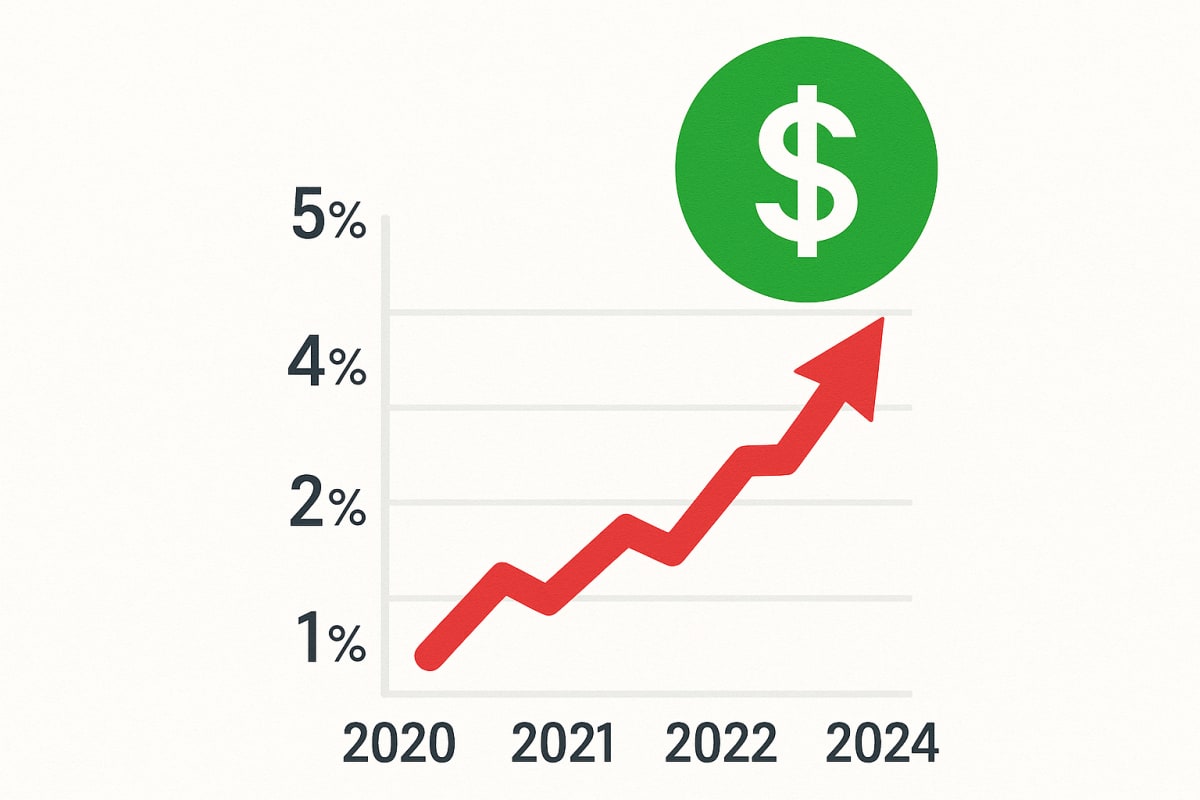
When TNX rises, global asset pricing resets. Growth sectors suffer first, EM markets lose capital, and USD strengthens. This chain reaction explains why many ETFs move together during yield spikes.
Main Signals from TNX
- Growth ETF valuation compression
- Emerging-market capital outflows
- Bond ETF decline (TLT, IEF)
- USD strength → EM currency weakness
3. How Rising TNX Affects Growth vs. Value ETFs
3-1. Growth ETFs Suffer When TNX Rises
Growth sectors (tech, internet, semiconductors) derive a large share of cash flow far into the future.
A higher TNX → higher discount rate → lower present value.
This disproportionately hits:
- QQQ
- ARKK
- SOXX
- FDN
A 1% increase in TNX historically leads to double-digit declines in high-duration growth ETFs.
3-2. Value ETFs Hold Up Better
Value stocks earn money today, not years later.
Their valuation depends less on discounting future cash flows.
Strong beneficiaries:
- XLF (Financials)
- XLE (Energy)
- VTV (Large Value)
- HDV, SCHD (Dividend Value)
Banks even benefit from rising TNX due to widening interest margins (NIM).
4. Comparison Layout — “Growth vs. Value Sensitivity”
Growth ETFs Under High TNX
- Severe valuation compression
- High volatility during rate spikes
- Cash flow far in the future → duration risk
- Largest drawdowns during tightening cycles
Value ETFs Under High TNX
- More stable earnings structure
- Financials benefit from higher yields
- Less sensitive to discount-rate changes
- Often outperform during early tightening
5. Emerging-Market ETFs: TNX + USD = Dual Pressure
When TNX rises:
- U.S.-bound capital increases
- USD strengthens
- EM currencies weaken
- Dollar-denominated debt pressure increases
- EM ETF returns fall sharply
Most vulnerable ETFs:
- EEM (Global EM)
- EWY (Korea)
- EWZ (Brazil)
- INDA (India)
Korea (EWY) is particularly sensitive because:
- KRW weakens quickly under USD strength
- Korea is export-driven
- Heavy technology weighting → high duration
6. Visual Overview

7. Two Essential Tables for ETF Analysis
7-1. Growth vs. Value Sensitivity Table
| ETF Type | Influence of TNX | Sensitivity | Notes |
|---|---|---|---|
| Growth (QQQ, ARKK) | Strong negative | ★★★★★ | Long duration cash flows |
| Semiconductors (SOXX) | Negative | ★★★★☆ | Valuation-driven |
| Value (VTV, XLF) | Mild/Positive | ★★☆☆☆ | Higher NIM for financials |
| Energy (XLE) | Mixed | ★★★☆☆ | Inflation dependent |
7-2. EM ETF Sensitivity Table
| ETF | Key Driver | TNX Impact | Currency Impact | Combined Risk |
|---|---|---|---|---|
| EEM | USD flows | High | High | ★★★★★ |
| EWY | KRW weakness | High | Very High | ★★★★★ |
| INDA | Domestic demand | Medium | Low | ★★☆☆☆ |
| EWZ | Commodities | Medium | Medium | ★★★☆☆ |
8. Korea: The Most TNX-Sensitive Developed Market ETF
Korea’s ETF structure is dominated by:
- Semiconductors (Samsung Electronics, SK Hynix)
- Internet/Platform
- Battery/EV supply chain
These are long-duration, high-growth industries, making EWY (and Korean ETFs generally) among the most TNX-sensitive in the world.
9. Checklist — “Before Buying Any ETF During High TNX”
- Is the ETF growth or value heavy?
- Does the ETF depend on future cash flow?
- Does the ETF rely on USD funding?
- Does the ETF belong to an EM with FX risk?
- Is the ETF’s sector cyclical or defensive?
- Does the ETF benefit from higher yields (e.g., financials)?
- What is the historical behavior of this ETF in past rate cycles?
- Is the ETF vulnerable to USD strength?
10. Conclusion (3 Lines)
- TNX deeply influences global ETF performance through valuation, liquidity, and currency channels.
- Growth, EM, and tech-heavy ETFs suffer the most during yield spikes.
- ETF investors gain a major advantage by adding TNX to their regular monitoring routine.
11. CTA
Compare ETF returns with CAGR
When rates change, annualized returns are often more useful than headline cumulative returns.
Open CAGR CalculatorUseful next reads:
- TNX Explained: Why the 10-Year Treasury Yield Drives Markets
- What Is DXY? A Beginner-Friendly Explanation for Investors
- Why Korea ETFs Are the Most Sensitive to TNX
12. FAQ
Q1. Why does TNX affect ETFs more than individual stocks?
Because ETF baskets amplify macro sensitivity. Growth-heavy ETFs, especially, move as a group under yield shocks.
Q2. Why do EM ETFs fall when TNX rises?
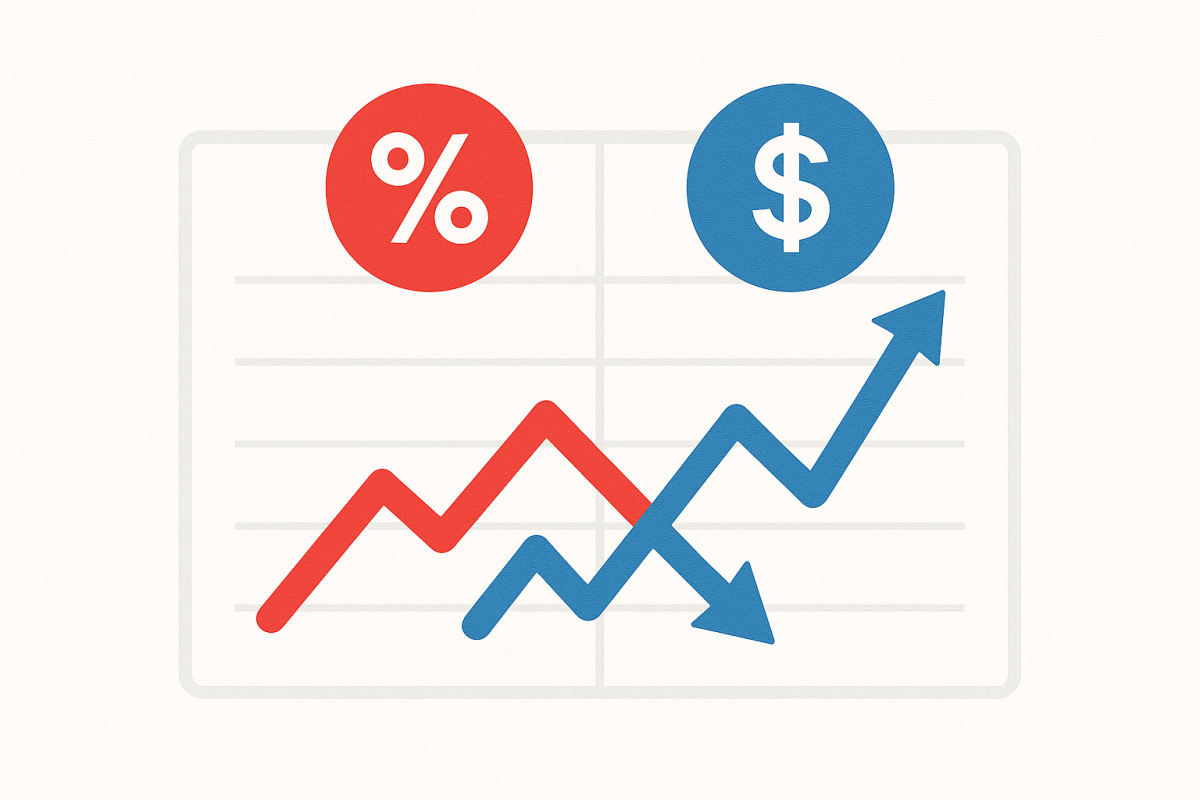
TNX↑ → USD↑ → EM currency↓ → EM capital outflows → ETF declines.
Q3. Are bond ETFs always negatively affected?
Long-duration Treasury ETFs (TLT) fall when TNX rises. Short-duration ETFs are less sensitive.
Q4. Do rising yields always mean falling stocks?
Not always — early in tightening cycles, financial and energy ETFs often outperform.