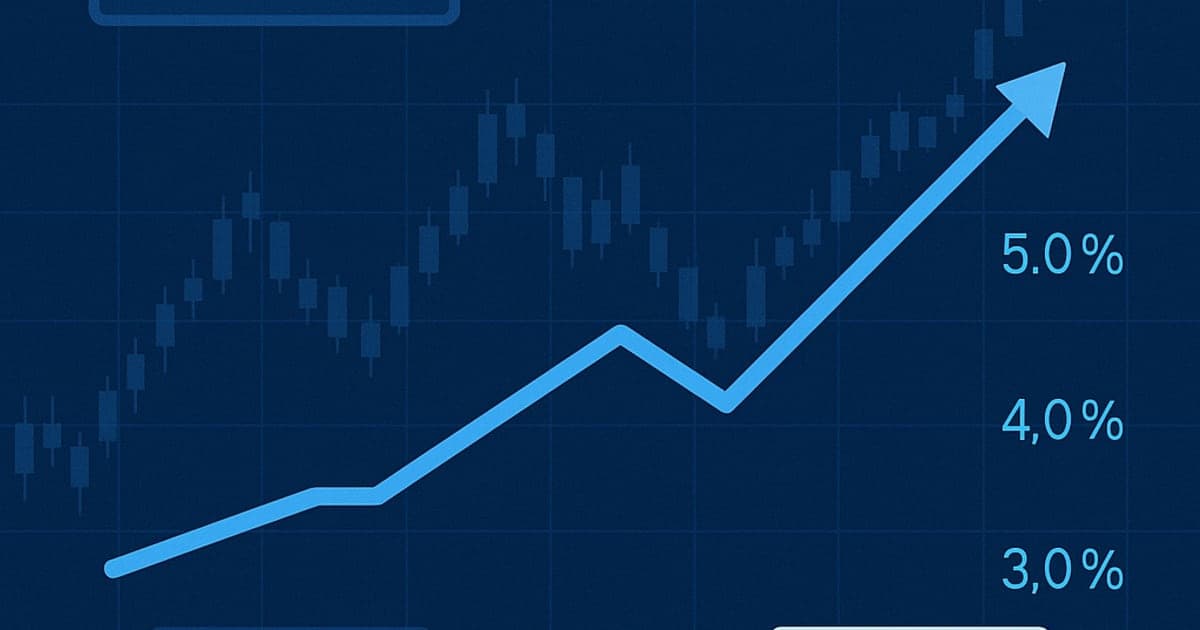
Summary (10 sentences)
- The U.S. 10-year Treasury yield (TNX) functions as the global discount rate.
- When TNX rises, asset valuations across the world adjust downward.
- U.S. stock performance varies across value stocks and growth stocks depending on TNX levels.
- Korea’s stock market reacts even more sensitively to TNX changes.
- A rising TNX typically leads to KRW depreciation and foreign capital outflows.
- Companies face higher borrowing costs and valuation multiples contract.
- When TNX declines, liquidity returns and risk assets rebound quickly.
- Growth stocks—including tech, semiconductor, and long-duration industries—respond most strongly.
- The USDKRW exchange rate and TNX move together, influencing Korea’s market direction.
- Tracking TNX is essential for both global and Korean equity investors.
One-paragraph summary
The U.S. 10-year Treasury yield is the anchor of global financial markets. TNX affects liquidity, equity valuations, currencies, corporate financing costs, and foreign investment flows. Because Korea is one of the world’s most open and sensitive markets, TNX changes directly shift the USDKRW exchange rate, foreign investor behavior, and KOSPI direction. Understanding TNX is essential for long-term investment timing and risk management.
1. Introduction — Why TNX Drives the Global Market
Every global investor watches TNX every single day.
There is one key reason:
TNX = the world’s benchmark cost of capital.
It influences:
- Global liquidity
- Risk appetite vs risk aversion
- Growth stock valuation levels
- Currency movements
- Capital flows into emerging markets
Korea, in particular, reacts faster and more intensely due to its high foreign ownership and currency sensitivity.
2. TNX Is the “Heart Rate” of Global Capital
TNX = The global discount rate
The U.S. 10-year Treasury yield determines how global assets are priced. Its movements alter valuations, currency trends, and foreign money flows. The reason Korean stocks often fall sharply when TNX rises is because TNX directly influences liquidity, discount rates, and risk appetite.
Key Points
- Higher TNX → lower growth-stock valuations
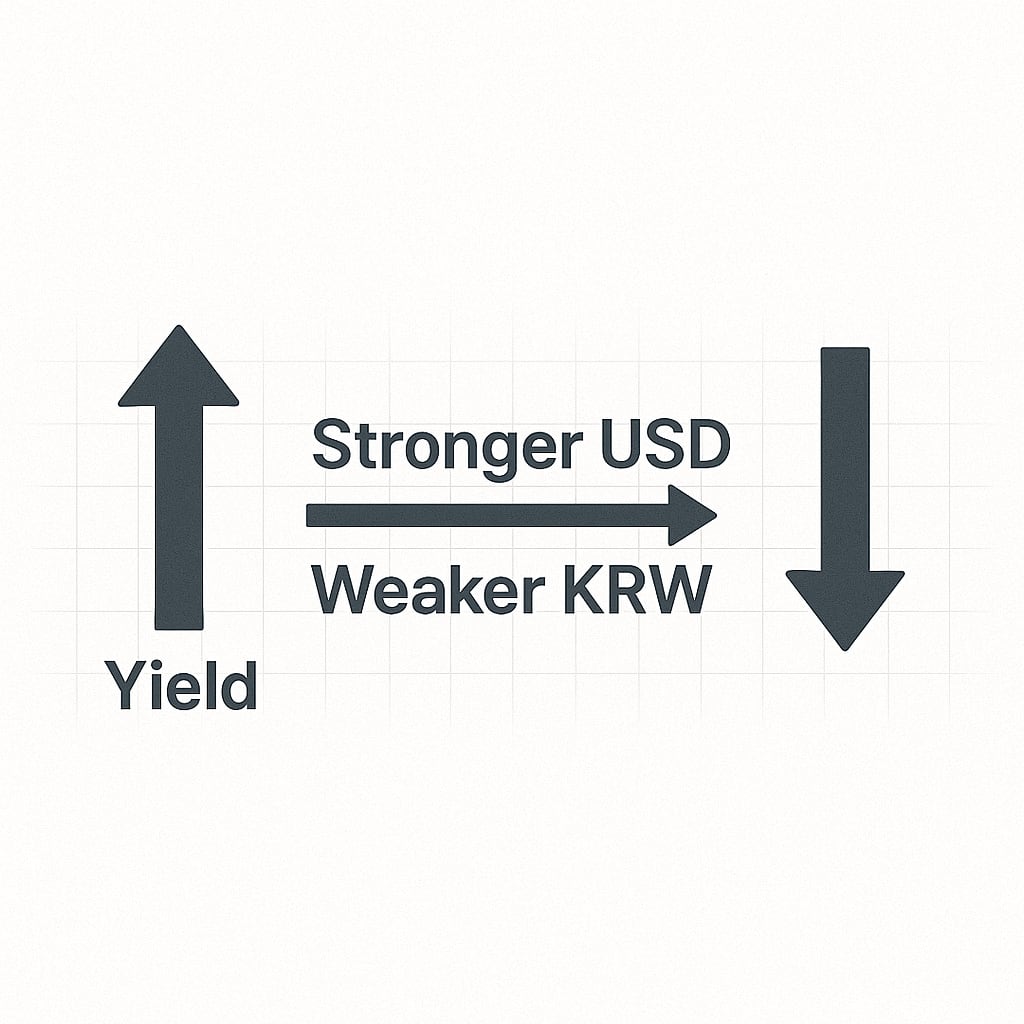
- TNX ↑ = Stronger USD → Weaker KRW
- Foreign investor flows follow TNX
- TNX spikes often precede liquidity shocks
3. How TNX Affects the Economy
When TNX changes, several macro mechanisms follow immediately.
3-1. When TNX rises
- Money shifts from risk assets → U.S. Treasury bonds
- USD strengthens as yields rise
- Emerging markets face selling pressure
- Corporate borrowing costs rise
- Equity valuations (PER, PBR) contract
3-2. When TNX falls
- Liquidity returns to equities
- Growth stocks outperform
- KRW strengthens and foreign capital flows into Korea
- Leveraged companies gain breathing room
4. Rise vs Fall — TNX Comparison (Compare Layout)
When TNX rises (Yield ↑)
- Growth stock valuations fall
- KRW weakens against USD
- Foreign investors sell Korean stocks
- Companies face higher interest expenses
- IPO and VC activity slows
When TNX falls (Yield ↓)
- Tech and growth stocks rebound strongly
- KRW strengthens → foreign funds return
- Valuation multiples normalize
- Borrowing pressure decreases
- Market-wide liquidity rallies occur
5. Why TNX Acts as a “Discount Rate”
All asset pricing boils down to one formula:
Present Value (PV) = Future Value / (1 + r)^t
Here, r = TNX.
As TNX rises, the denominator increases → present value of growth companies falls.
This is why:
- Nasdaq
- Semiconductor stocks
- High-growth tech companies
respond dramatically to TNX.
6. Visualizing TNX Effects


7. Table 1 — Korea’s Sensitivity to TNX (Example)
| Category | Rising TNX | Falling TNX |
|---|---|---|
| USDKRW rate | KRW weakens | KRW strengthens |
| Foreign investor flows | Net selling | Net buying |
| Growth stocks | Downward pressure | Strong rebound |
| Value stocks | Relative strength | Neutral |
| KOSPI index | Volatility up | Steady upward trend |
8. Table 2 — Why TNX Matters More for Korea
| No. | Reason | Description |
|---|---|---|
| 1 | High foreign ownership | 30% of KOSPI is foreign-owned |
| 2 | Currency sensitivity | Yield↑ → USD↑ → KRW↓ → stock decline |
| 3 | Growth-heavy industries | High sensitivity to discount-rate changes |
| 4 | Corporate debt structure | Rising yields hurt leveraged firms |
| 5 | Open financial market | Korea reacts faster than most countries |
9. Why Korea Reacts Faster Than the U.S.
9-1. KRW is a “risk-on currency”
KRW is classified globally as a risk-on/emerging-market currency.
Meaning:
- Good global sentiment → KRW strengthens
- TNX rises, oil rises, or USD strengthens → KRW weakens
9-2. Foreign investors = 30% of KOSPI
When TNX rises and USD strengthens,
foreign investors automatically reduce Korean equity positions.
This makes Korea one of the most sensitive markets to TNX.
10. How to Use TNX — Beginner vs Experienced Investor
10-1. For beginners
- Avoid aggressive buying when TNX surges
- Watch USDKRW first before buying Korean equities
- Prefer large caps or defensive ETFs
- Start buying when TNX stabilizes or reverses downward
10-2. For experienced investors
- Adjust portfolio weights according to TNX zones
- Use Treasury futures or currency hedging
- Increase growth-stock allocation when TNX < 4%
- Reduce risk when TNX enters 4.5–5% zone
- Combine TNX + currency + liquidity indicators for precise timing
11. Callout — Core Insight
12. Conclusion (3 lines)
- TNX drives valuation, liquidity, and global capital flows.
- Korea reacts more strongly than most markets due to currency and foreign-investor sensitivity.
- Falling TNX often marks the beginning of major equity rebounds.
13. CTA — FinMap Tools
FinMap CAGR & Compound Interest Calculators
Compare TNX-based real returns with your long-term return assumptions using FinMap's calculators.
Open CAGR Calculator Open Compound Interest CalculatorUseful next reads:
- TNX Explained: Why the 10-Year Treasury Yield Drives Markets
- How U.S. 10Y Yield (TNX) Affects ETFs
- What Is DXY? A Beginner-Friendly Explanation for Investors
14. FAQ (5 items)
Q1. Should investors check TNX daily?
A: Yes. TNX is the most important leading macro indicator, especially for Korean equity investors.
Q2. Does a rising TNX always mean stocks fall?
A: Long-term valuations decrease, but short-term moves depend on overall sentiment and liquidity.
Q3. Why does TNX affect the USDKRW rate?
A: Higher yields strengthen the USD, which weakens KRW and triggers foreign outflows.
Q4. Does TNX affect all stocks equally?
A: Growth stocks react the most, but TNX affects all asset classes through discount-rate effects.
Q5. What’s the simplest way to track TNX?
A: FinMap’s global indicators dashboard, TradingView, or Investing.com.