Summary (10 key statements)
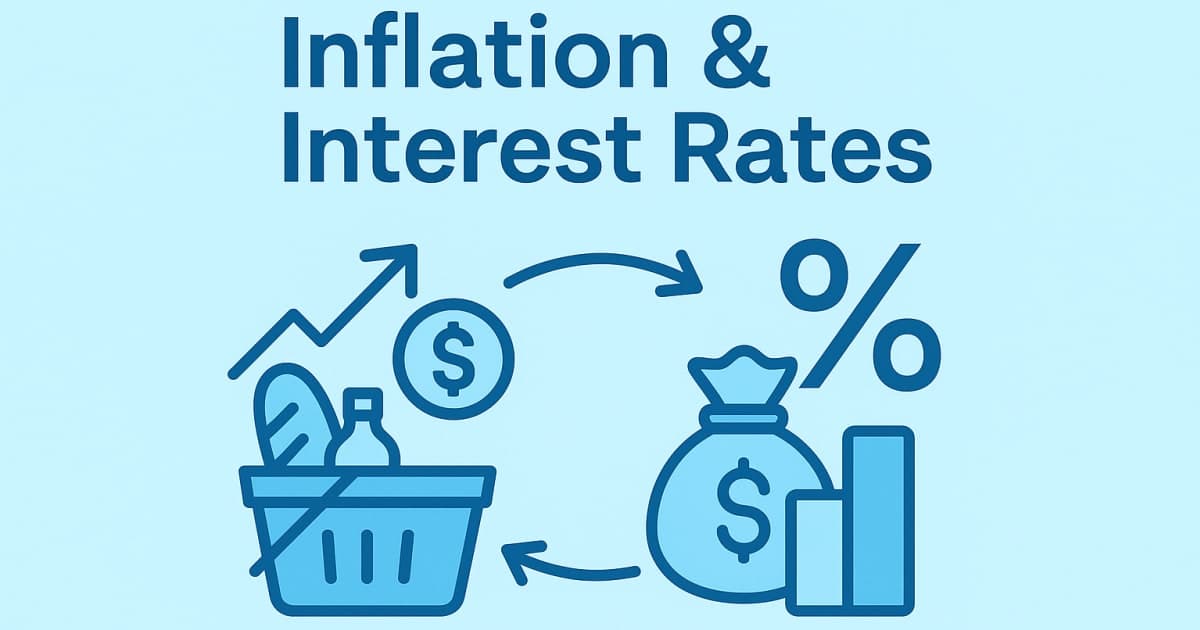
- Inflation and interest rates are the core mechanism that sets the pace, cost, and liquidity of the economy.
- When inflation rises, central banks raise interest rates to cool economic activity.
- Interest rates represent the “price of money”—high rates slow the economy, and low rates accelerate it.
- The U.S. and Korea show different inflation compositions, creating different monetary reactions.
- U.S. rates heavily influence Korea’s economy and financial markets.
- Inflation and interest rates determine valuations for stocks, ETFs, real estate, and all risk assets.
- High inflation hurts growth stocks the most because of valuation compression.
- Rate-cut cycles revive liquidity, earnings, and valuation expansion across markets.
- This article focuses on practical interpretation, not theory, from an investor’s perspective.
- At the end, we connect inflation–rate dynamics to FinMap compound calculators and goal simulators.
One-paragraph summary
Inflation and interest rates are not abstract economic indicators—they are the system that controls asset performance. Inflation pushes rates higher, higher rates slow the economy, and rate cuts revive growth, risk assets, and real estate. Understanding this structure dramatically improves ETF timing, long-term planning, and macro interpretation. This article explains inflation–interest dynamics with real-world investor-centric insights.
1. Introduction — Why this is the starting point for all macro analysis
Most investors know only one rule:
“When rates go up, stocks fall.”
But why they fall, which assets fall first, when markets bottom, and what drives the rate cycle itself are often misunderstood.
Inflation and interest rates are the foundation behind:
- liquidity
- corporate earnings
- household consumption
- currency strength
- growth vs value rotation
- real estate cycles
- global capital flows
This guide is built for practical use, not theory—focused on how a long-term investor should read the macro environment.
2. Inflation → Rates → Economy in one simple framework
The Basic Gateway of Macro
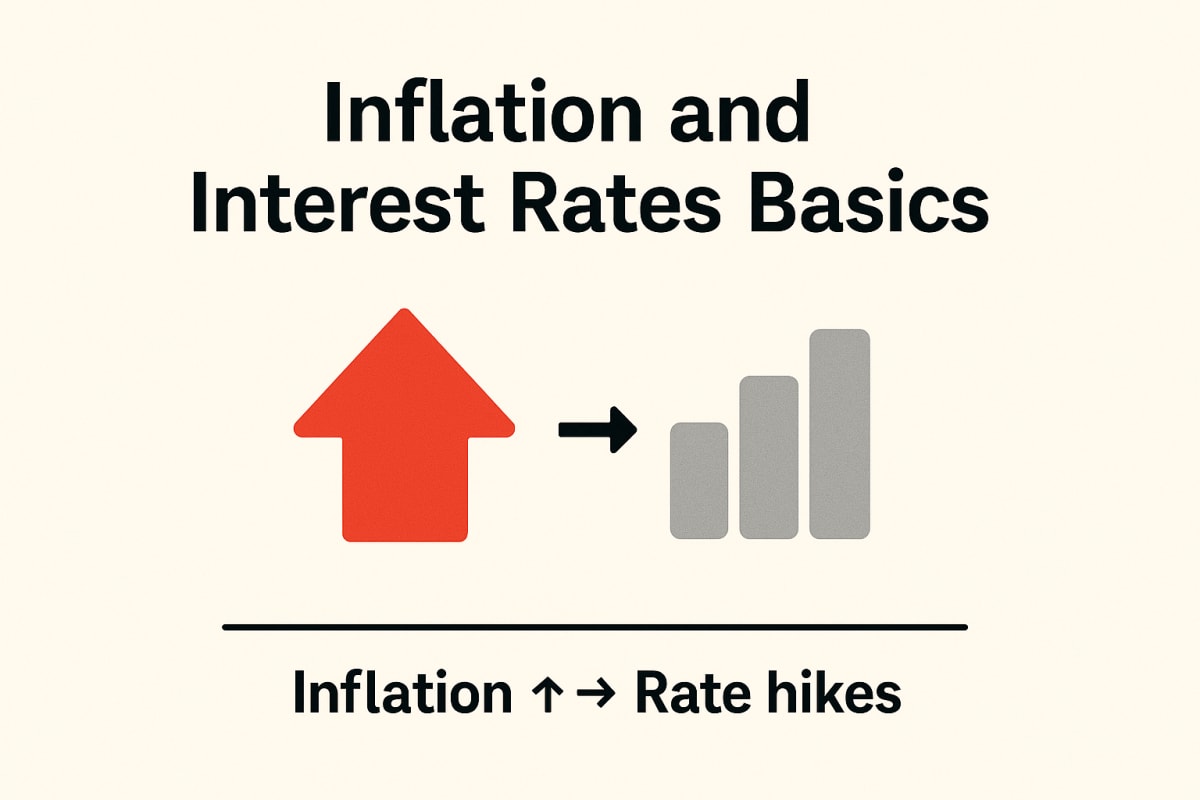
When inflation rises, central banks raise interest rates. Higher rates slow consumption and investment. When inflation stabilizes, rates fall—and liquidity returns to growth stocks, real estate, and risk assets.
Core Principles
- Inflation ↑ → Rates ↑
- Rates ↑ → Economy slows
- Rates ↓ → Growth assets rise
3. Understanding Inflation (What pushes prices up?)
■ Three main drivers of inflation
- Demand-pull inflation: Strong consumption pushes prices up
- Cost-push inflation: Input costs (oil, commodities, supply chain) rise
- Wage inflation: Higher labor costs → corporates raise prices
■ Why inflation matters
High inflation reduces real purchasing power
AND increases corporate production costs.
To cool these pressures, central banks raise rates.
4. Interest Rates — How they are determined
■ Core rule
- Inflation ↑ → Rate hikes
- Inflation ↓ → Rate cuts
■ Rates = “the price of money”
When the price of money is high (high rates) → people borrow/spend less.
When it’s low (low rates) → borrowing/spending increase.
■ Effects on the investment market
- Rate hikes → growth stock valuations compress
- Rate cuts → growth stocks, tech stocks, and real estate strengthen
- At rate peaks, markets anticipate the pivot and move ahead of policy
5. Economic impact of inflation vs interest rate cycles
High Inflation & Rate Hike Cycle (Bearish)
- Growth stock valuation compression
- Corporate margin deterioration
- Consumption slowdown
- High mortgage cost → real estate cooling
Stable Inflation & Rate Cut Cycle (Bullish)
- Corporate earnings recovery
- Growth & tech stock rebound
- Real estate stabilization
- Liquidity expansion → ETF rally
6. Tables — Seeing inflation & rate dynamics numerically
■ Table 1: Market reaction by inflation phase
| Inflation Phase | Rate Policy | Market Reaction | Beneficiaries |
|---|---|---|---|
| High & sticky | Hikes | Liquidity contraction | Value, defensive |
| Starting to cool | Pause | Lower volatility | Large caps |
| Stable | Cuts | Liquidity expansion | Growth, tech, real estate |
| Disinflation | Easing | Strong risk-on | S&P500, NASDAQ |
■ Table 2: Economic flow by rate direction
| Rate Direction | Consumption | Corporate Investment | FX Trend | Asset Market |
|---|---|---|---|---|
| ↑ (Hike) | ↓ | ↓ | USD strength | Stocks/real estate weaken |
| → (Pause) | ↔ | ↔ | Stable | Low volatility |
| ↓ (Cut) | ↑ | ↑ | USD weakness | Stocks/real estate rally |
7. Visualizing inflation–rate dynamics


8. Beginner vs Expert Interpretation
■ Beginner’s view
- Rates = “loan interest”
- Inflation = “prices went up”
- Market volatility is confusing and unpredictable
■ Expert’s view
- Rates are the discount rate used in valuation models
- Inflation components determine policy speed more than the headline number
- Rate pivots are major macro catalysts
- Rates create lead–lag effects across asset classes
- Reading inflation–rate sequences maps the entire business cycle
9. Practical Investor Checklist (7 items)
- Is inflation demand-driven or supply-driven?
- Where is the rate cycle? (Hiking / Peak / Cut)
- Has the central bank hinted at a pivot?
- Are corporate earnings improving?
- What is the USD trend?
- What is the 10Y Treasury yield (TNX) doing?
- Is the environment favorable for growth or value?
10. Final Takeaways
- Inflation and interest rates determine the broad direction of markets.
- Rate turning points are the most important macro signals for investors.
- Use inflation → rates → liquidity flow to shape long-term strategy.
Useful next reads:
- How Interest Rates Work: From Policy Rates to Deposits, Loans, and Bonds
- A Rate Cut Doesn't Guarantee Lower Borrowing Costs: Policy Rates vs Market Rates
- Is 7% Compounding Realistic? A CAGR Reality Check
11. CTA — Connect to FinMap tools
See how changing interest rates affect your long-term wealth
Use FinMap’s compound interest calculator and goal simulator to understand the long-term effect of different rate environments.
Open Compound Calculator Open Goal SimulatorFAQ
Q1. Do central banks raise rates even if inflation rises only slightly?
A. It depends on inflation composition. Central banks focus more on “core inflation” than volatile items like food or energy.
Q2. Why do growth stocks fall first during rate hikes?
A. Growth valuations are built on distant future earnings, which are heavily discounted when rates rise.
Q3. Can markets rise even during a rate-hike cycle?
A. Yes. Markets often react to the pace, peak, and pivot expectations rather than the hike itself.
Q4. When inflation stabilizes, do rates immediately fall?
A. No. Central banks usually wait for confirmation before moving to a rate-cut cycle.